Series 3: How AI Imagery Becomes a Modern Mental Health Comforter
The Need for New Forms of Calm
In an era marked by constant stimulation, social disruption, and collective stress, the need for accessible, culturally responsive mental health supports has never been greater. Schools, community centers, workplaces, and wellness organizations are increasingly adopting diverse wellness policies, along with a new trend known as – digital calming rooms—technology-enhanced spaces designed to reduce anxiety, regulate emotions, and restore mental balance. When combined with sound healing and AI-generated imagery, these rooms become powerful environments for comfort, grounding, and emotional regulation.
Digital calming rooms do not replace traditional therapy; rather, they serve as preventive, complementary tools that meet people where they are—emotionally, culturally, and technologically. They are especially impactful for youth, trauma-impacted communities, neurodivergent individuals, and those who may face barriers to accessing conventional talking therapy.

What Is a Digital Calming Room?
A digital calming room is a physical or virtual space intentionally designed to promote relaxation and emotional self-regulation through immersive sensory experiences. These rooms typically integrate:
- Ambient lighting or projection mapping
- Calming visuals or nature-based scenes
- Sound healing elements such as frequencies, music, or guided audio
- Interactive or responsive digital content
Unlike traditional quiet rooms, digital calming rooms leverage technology to create adaptable environments that can respond to different emotional needs—stress, grief, anger, sensory overload, or fatigue. They can be deployed in schools, wellness hubs, libraries, clinics, shelters, and even mobile or pop-up installations.
The Role of Sound Healing in Emotional Regulation
Sound healing is one of the oldest therapeutic practices across cultures, from Tibetan singing bowls and Indigenous drumming to chanting and breath-based vocalization. Modern neuroscience now confirms what many traditions have long understood: sound directly affects the nervous system and emotional regulation.
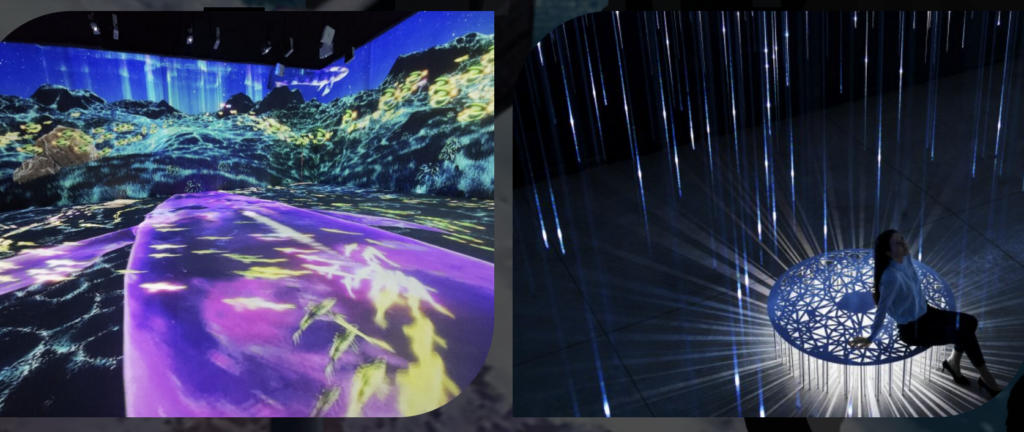
In a digital calming room, immersive environments can feature forest, ocean, and mountain scenes presented in a dimly lit setting, paired with music intentionally designed to support healing and emotional balance. Drawing from Traditional Chinese Medicine (TCM) beliefs, different soundscapes can be aligned with the energetic healing of specific organs—particularly the heart, lungs, and liver – which are deeply connected to emotional wellbeing. In Chinese healing traditions:
- The heart is associated with joy, emotional clarity, and the spirit (Shen). Gentle, steady rhythms and warm tones help calm anxiety and restore emotional coherence.
- The lungs govern breath, grief, and the ability to let go. Slow, flowing sounds—such as wind, water, or breath-like frequencies—support respiratory ease and emotional release.
- The liver is linked to stress, anger, and the smooth flow of energy (Qi). Expansive sound patterns and resonant vibrations help release tension and restore balance.
When combined with digitally rendered natural landscapes, these sound-healing elements create a multisensory environment that gently guides the nervous system toward calmness. This approach allows individuals to experience healing without words, making the calming room especially effective for those who process emotions somatically or come from cultures where non-verbal healing practices are central.
Research Foundations: AI, Immersive Displays, and Mental Health
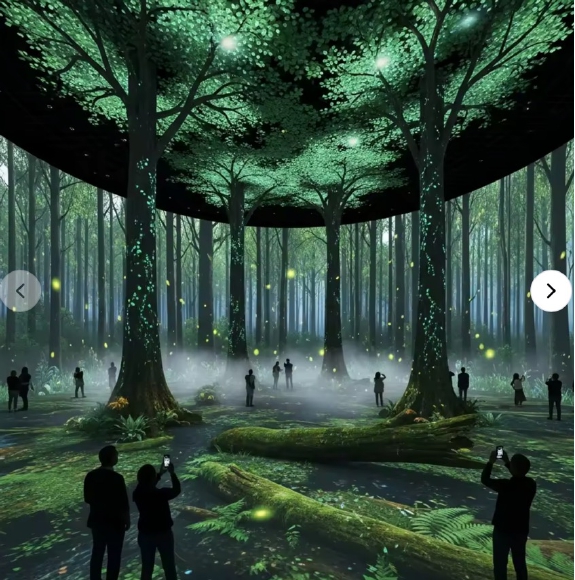
A growing body of interdisciplinary research in neuroscience, psychology, and human–computer interaction demonstrates that immersive digital environments can positively support mental health and emotional regulation. Studies on virtual and augmented reality have shown reductions in stress, anxiety, and perceived pain when individuals are exposed to calming, nature-based digital scenes.
AI-enhanced systems further strengthen these outcomes by enabling personalization and responsiveness. Adaptive visuals, soundscapes, and lighting can be adjusted to user preferences, emotional states, or therapeutic goals, increasing engagement and effectiveness. Research suggests that when individuals feel a sense of agency and comfort within an environment, their nervous systems are more likely to shift from a stress response to a restorative state.
Importantly, immersive AI environments activate similar neural pathways as real-world nature exposure, particularly those associated with relaxation, attention restoration, and emotional processing. For communities with limited access to green spaces or consistent wellness resources, digital calming rooms provide an equitable alternative that brings the benefits of nature, mindfulness, and restorative presence indoors.
These findings reinforce the role of AI not as a replacement for human connection or clinical care, but as a scalable, supportive tool that enhances mental health infrastructure—especially in schools, community centers, and culturally responsive healing spaces.
Embodied Practices: Meditation and Yoga in Digital Calming Rooms
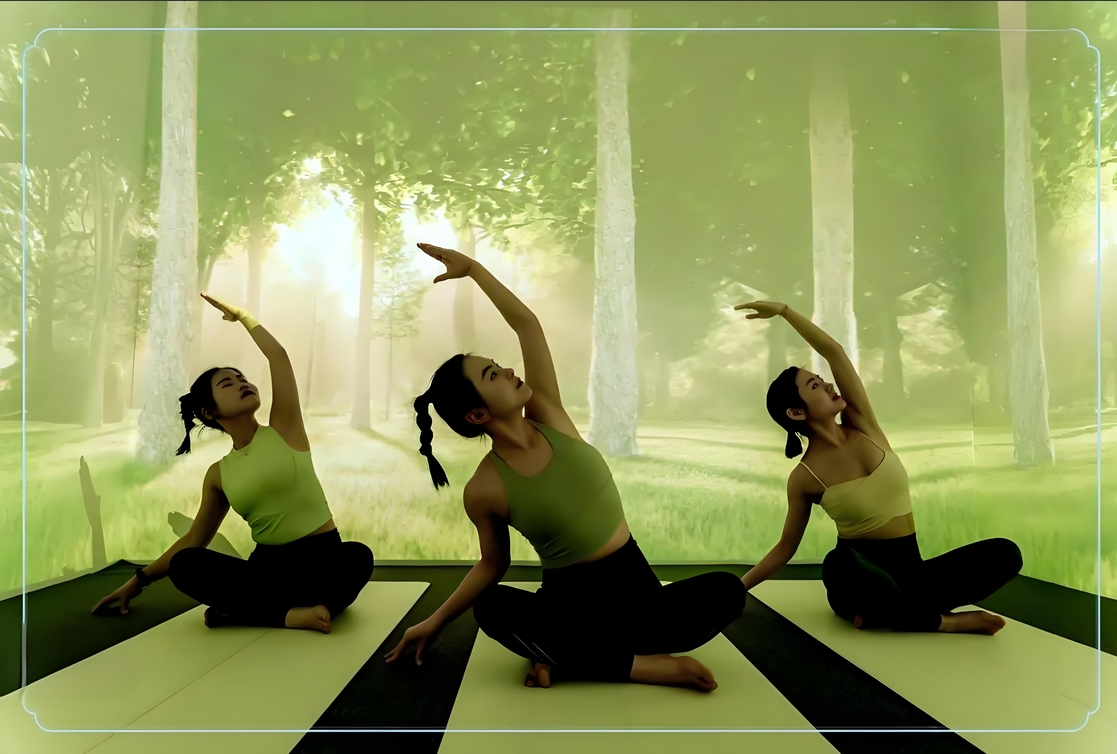
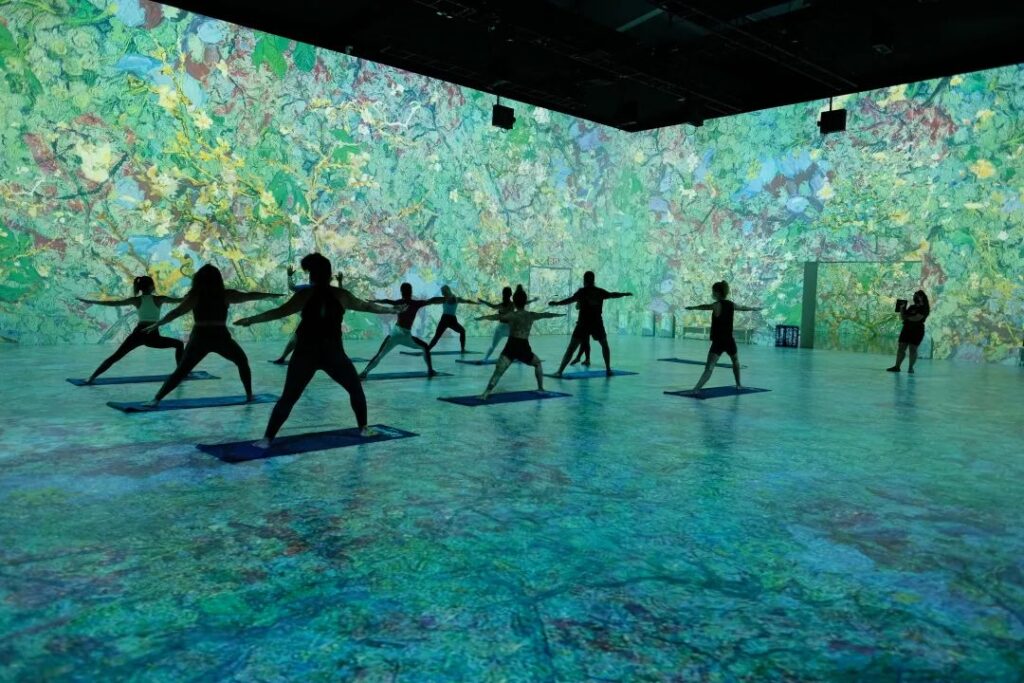
Digital calming rooms also serve as supportive environments for embodied practices such as meditation, mindfulness, breathwork, and gentle yoga. When individuals engage in these practices within immersive forest, ocean, or mountain scenes, the visual and auditory environment helps quiet external distractions and anchor attention in the present moment.
For meditation, slow-moving AI-generated imagery and responsive soundscapes can support sustained focus, regulate breathing, and reduce intrusive thoughts. For yoga and gentle movement, immersive displays encourage slower, more intentional motion while reinforcing a sense of grounding and safety. Dim lighting, combined with non-judgmental digital environments, allows participants to turn inward without feeling observed or overstimulated.
These features make digital calming rooms particularly effective for beginners, trauma-impacted individuals, and those who may feel intimidated by traditional wellness spaces. The technology does not instruct or correct; instead, it creates a compassionate container that supports self-paced healing and embodied awareness.
The Future of Digital Healing Spaces
As technology continues to evolve, digital calming rooms represent a hopeful direction for mental health innovation—one rooted in care, dignity, and accessibility. When sound healing and AI-generated imagery are guided by cultural awareness, ethical design, and human-centered values, they create spaces where people can simply breathe, feel, and recover. In a world that often demands constant productivity and resilience, digital calming rooms remind us that rest, beauty, and imagination are not luxuries—they are essential components of healing. Digital calming rooms are not about escaping reality. They are about restoring the nervous system so individuals can return to reality with greater clarity, balance, and strength.