Since late 2024, our organization has intentionally collected Social Connectedness and community wellness surveys from members, participants, and residents to inform the design of the proposed Center for Wellness Technology. To date, more than 152 surveys have been collected across community events, convenings, and engagement activities. This ongoing data collection effort ensures that the center is not driven by assumptions, but by lived experience, expressed needs, and community-defined priorities. The Social Connectedness Survey Set provides actionable insights that directly shape the center’s physical layout, programmatic components, and access strategies.
Understanding the Demographic Data and Barriers
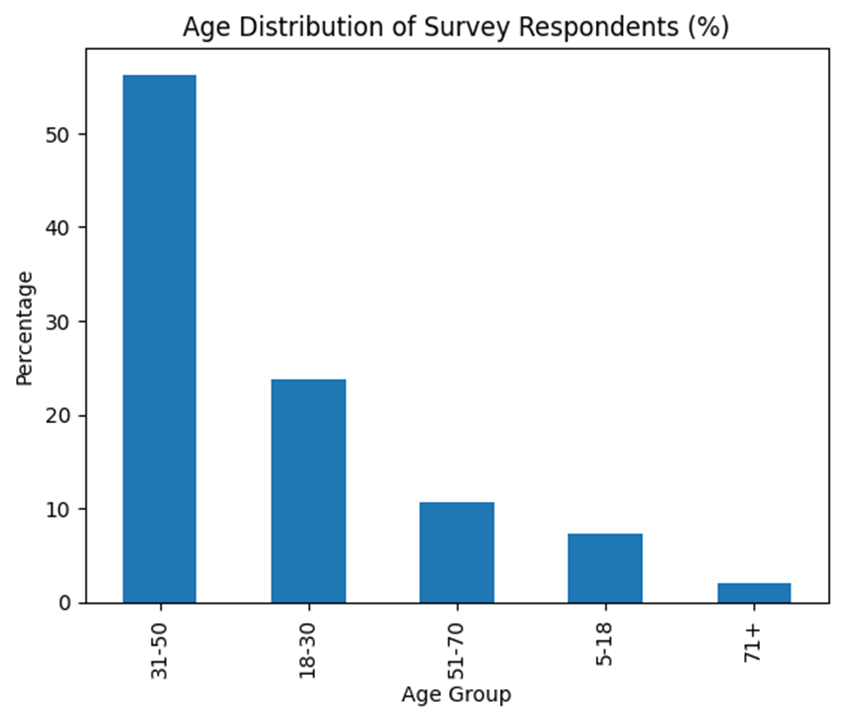
The survey confirms that the Center for Wellness Technology must primarily serve working-age adults and caregivers while remaining accessible across generations. With 56.3% of respondents ages 31–50 and 23.8% ages 18–30, more than 80% of participants are balancing employment, caregiving, and community responsibilities. This demographic reality supports a design that prioritizes flexible, drop-in access rather than rigid program schedules.
The age data directly supports multi-purpose spaces that can shift between evening, weekend, and intergenerational use, as well as extended hours for technology access and wellness services.
Survey data also reveals that while interest in community activities is strong, participation is shaped by significant access barriers. When asked what prevents them from using community activities and services, respondents most frequently cited lack of awareness of available activities (approximately 8.8%) and lack of transportation (approximately 8.4%). Other commonly reported barriers included limited intergenerational opportunities (7.6%), time constraints (7.3%), and lack of childcare or adult respite care (6.9%). Additional challenges such as cost (4.2%), lack of culturally or age-relevant opportunities (3.4%), and limited language access (3.1%) further demonstrate that structural and cultural factors—not lack of interest—are the primary obstacles to social connectedness. The barriers reinforce how these issues cluster around access, information, and caregiving needs.
Transportation data further illustrates inequities in access to community spaces. More than 52.7% of respondents rely on a personal vehicle to attend community activities, while significantly smaller percentages rely on walking (9.9%), public transit such as bus or light rail (7.8%), or rides from friends or family (5.8%). Only 3.3% reported using transportation provided by a community or faith-based organization, and just over 3% relied on Metro Mobility services. This transportation
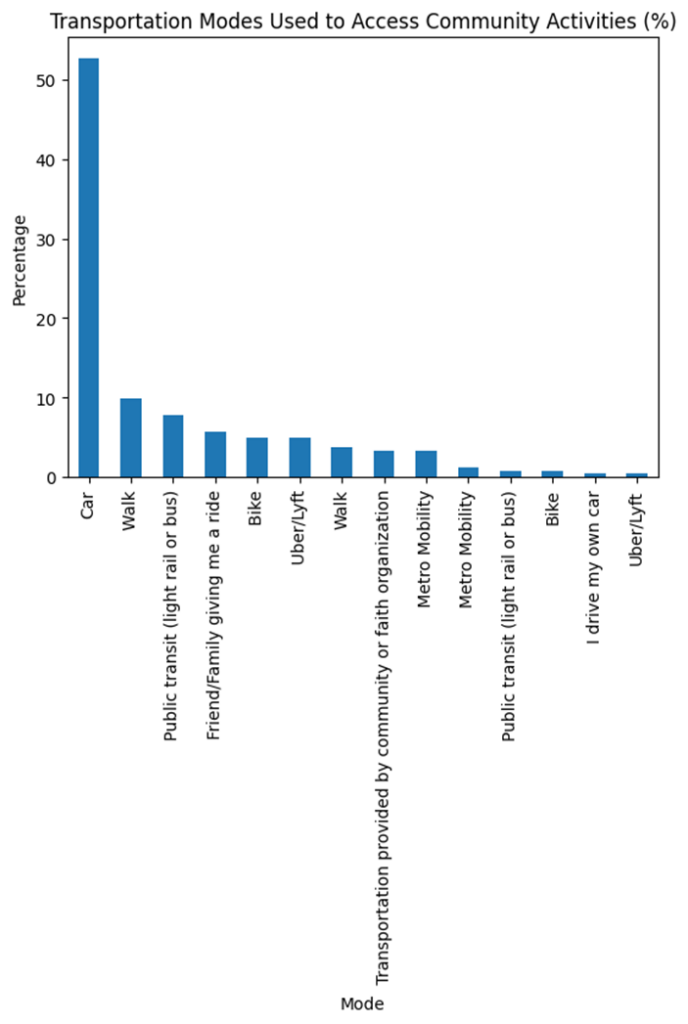
chart underscores that car dependency remains dominant, and without expanded transit options or community-provided transportation, many residents remain effectively excluded from participation. These findings validate the need for a centralized, co-located wellness hub that reduces travel and navigation burdens, and better at a site that public transportation can be reached. This data supports siting the center near transit corridors and incorporating a navigation desk to help residents plan visits, access transit information, and coordinate group transportation when needed. Also suggest the Center needs to co-locate technology, health education, wellness modalities, and food-based healing in one center, minimizing the number of trips required to access care and support.
How Survey Data Shapes Center Design
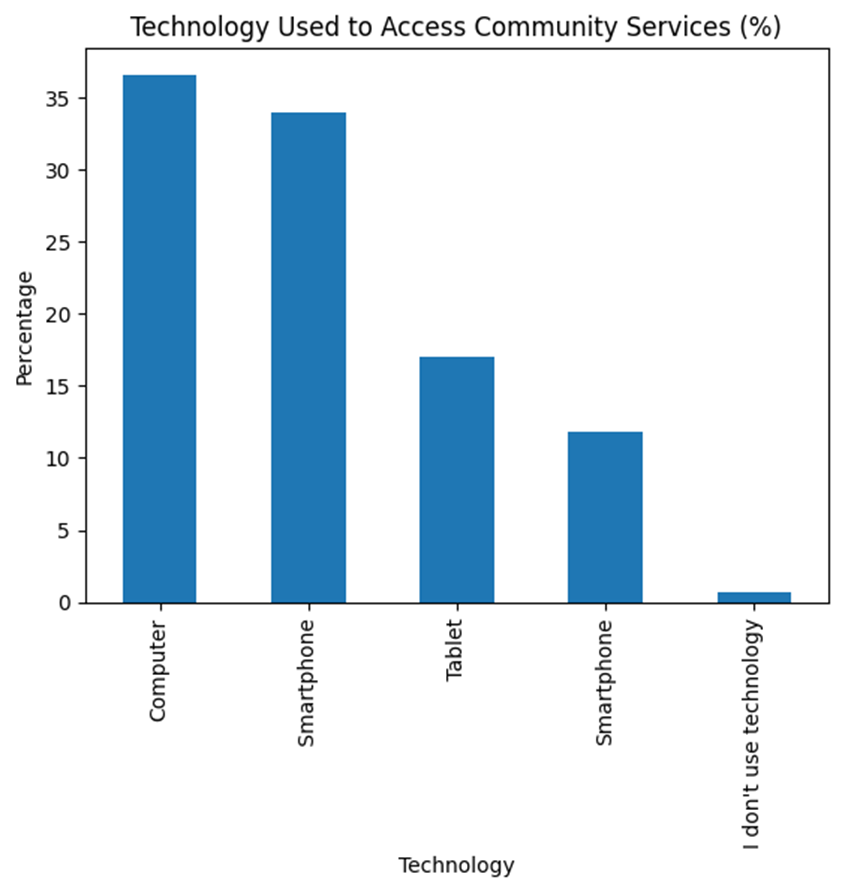
Many findings directly inform each major component of the Center for Wellness Technology. For example the technology access data shows both opportunity and limitation in how residents connect to information and services. While 36.6% of respondents use computers and 34.0% use smartphones, the survey also reveals gaps in consistent, reliable access and digital literacy. Technology is therefore a foundational wellness tool—not an optional add-on. The technology access chart highlights why hybrid communication approaches are essential for equitable reach. The inclusion of a computer lab and digital wellness space is directly informed by technology access data. This result explicitly supports the creation of a staffed computer lab where residents can access telehealth, health portals, benefits enrollment, workforce training, and culturally relevant wellness information with in-person assistance.
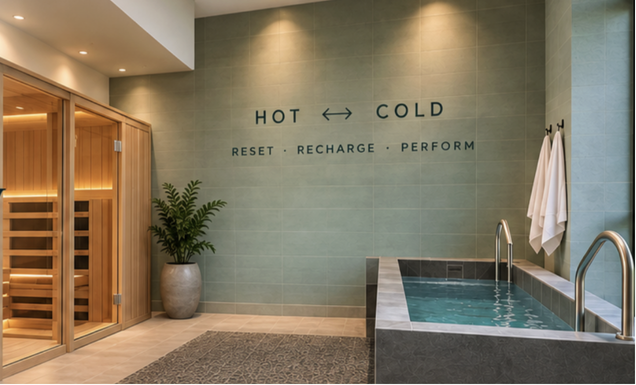
Time constraints and caregiving responsibilities identified in the survey also shape the center’s health and wellness modality spaces. Flexible, culturally grounded wellness rooms allow individuals and families to engage in stress reduction, movement, and healing practices without long time commitments. This result justifies drop-in, short-session wellness offerings and family-inclusive design rather than appointment-only models.
Survey findings related to cultural relevance and language access further support theintegration of herbal medicine and traditional healing practices. Respondents identified barriers tied to lack of culturally appropriate programming and language access, reinforcing the need to elevate ancestral knowledge as a core health resource. This call-out connects survey data directly to dedicated space for herbal education, traditional remedies, and culturally rooted wellness practices. The Food Is Medicine component of the Center is informed by the survey’s emphasis on prevention, access, and social connection. Food-based programming addresses health at its root while creating natural opportunities for intergenerational learning and relationship-building.
The results shows how nutrition education, herbal knowledge, and culturally relevant food practices respond simultaneously to health, access, and social connectednessneeds.
Finally, the survey reveals meaningful readiness among community members to move from participation to leadership. Nearly 47.5% of respondents expressed interest in supporting or helping develop future community programs. This data demonstrates substantial potential for volunteerism, co-creation, and community-led program design when engagement pathways are clear and accessible. The interest-in-support data shows the untapped capacity and reinforces the value of investing in leadership development and culturally grounded engagement models.
Conclusion
The survey data paints a consistent picture: community members want to be connected, informed, and involved, but face persistent barriers related to transportation, time, caregiving, cultural relevance, and access to information. Addressing these barriers through coordinated investments in mobility, outreach, culturally responsive programming, and flexible engagement models will be essential to strengthening social connectedness and long-term community well-being.
Together, our Design of the Center for Wellness Technology provides a robust, community-driven foundation. Each major design element—computer lab, wellness modalities, herbal medicine, and Food Is Medicine—is directly mapped to documented community needs and participation barriers. The result is a Center intentionally designed not only to deliver services, but to strengthen social connectedness, cultural continuity, and long-term health equity.