As wisdom reminds us, you cannot protect what you have never felt. The 2026 Taiwan International Orchid Show & Floral Technology Exhibition proved exactly this: that technology, at its best, can help people feel and interact with orchids in ways that inspire them to protect and preserve what they have come to love.
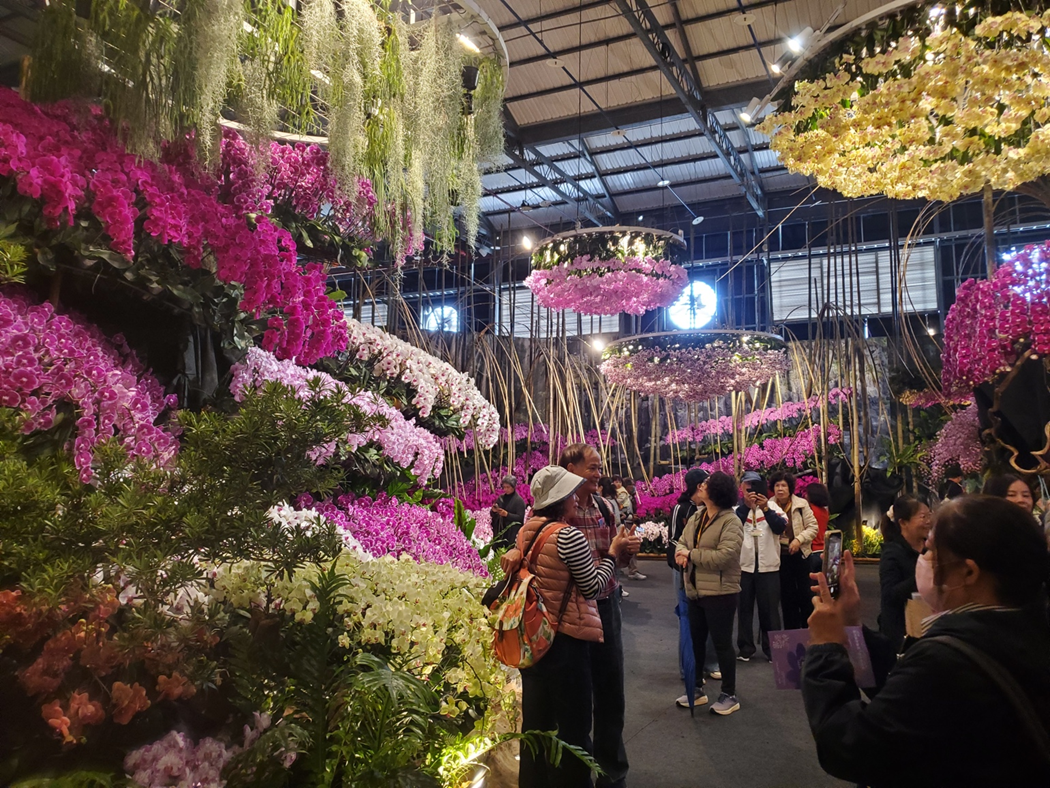
With more than 28,000 species — the largest family of flowering plants on Earth — orchids have spent 80 million years perfecting the art of connection, finding precisely the right sensory language to reach the creatures they need. The 2026 Taiwan International Orchid Show & Floral Technology Exhibition, held at the Ministry of Agriculture’s Floral Industry Innovation Center in Houbi, Tainan, demonstrated that humans are now learning to do the same — using immersive technology not to replace nature’s beauty, but to bring it to people who might never otherwise encounter it.
Agricultural Technology — Growing More Than Flowers
Taiwan’s orchid industry — which now supplies more than 80% of the global Phalaenopsis market — has transformed from traditional greenhouse cultivation into a precision science. AI-powered climate control systems monitor temperature, humidity, light spectrum, and root moisture across thousands of growing chambers simultaneously, while growth modeling predicts optimal bloom timing for export markets, reducing waste while maintaining the consistency international buyers require.
The 2026 show introduced a new variety registration platform and digital image database, enabling faster documentation and global sharing of cultivar data. This is conservation technology in its most direct form: when rare and heritage varieties are formally archived and made accessible to researchers and growers worldwide, the biological knowledge embedded in those varieties — about climate adaptation, pathogen resistance, and cultural significance — becomes part of humanity’s shared scientific inheritance. As Minister of Agriculture Chen Junne-jih emphasized at the opening, Taiwan’s industry has shifted deliberately from price competition to value creation, from growing more to growing better.
Immersive Technology — Bringing Nature Into the Body
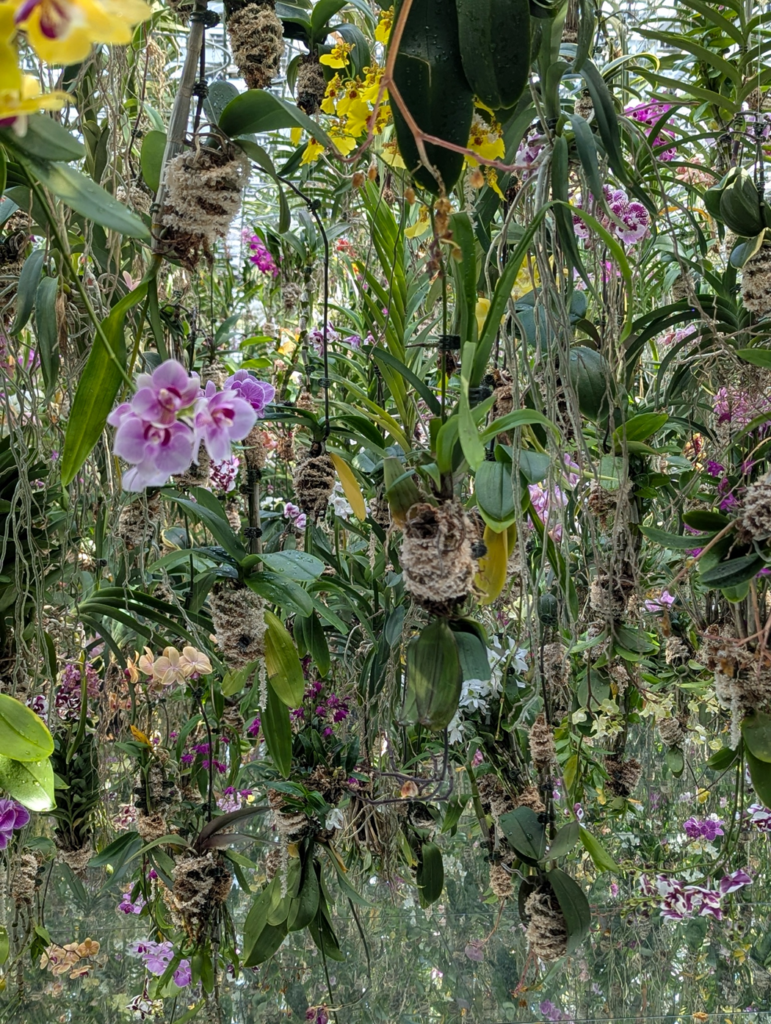
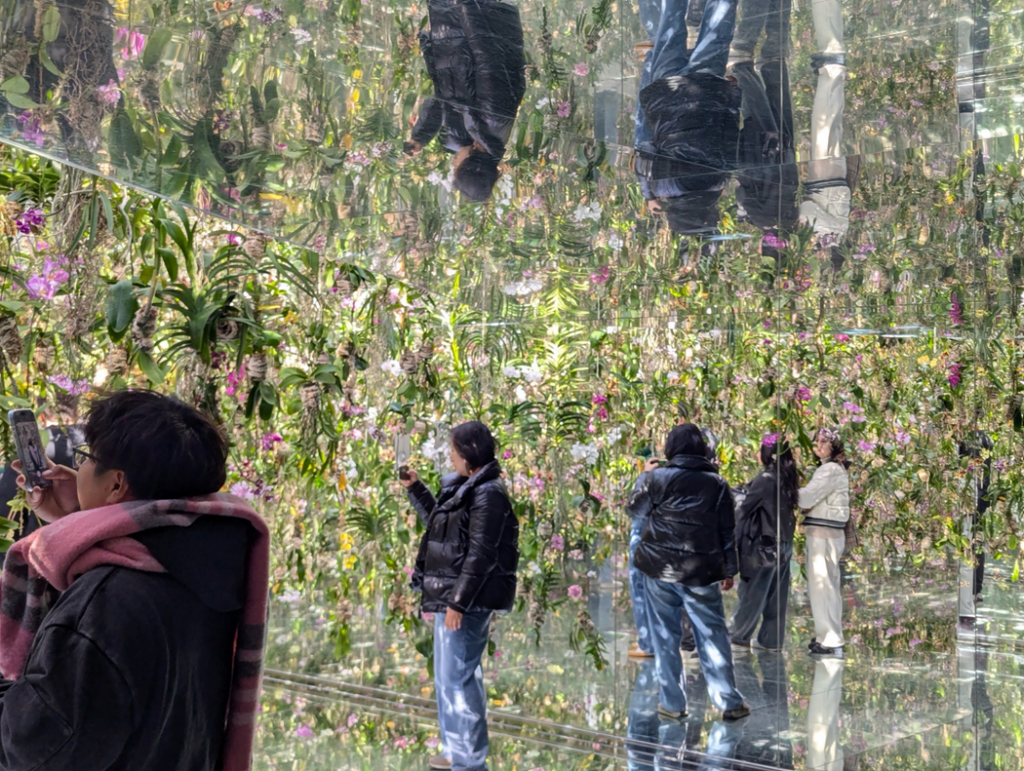
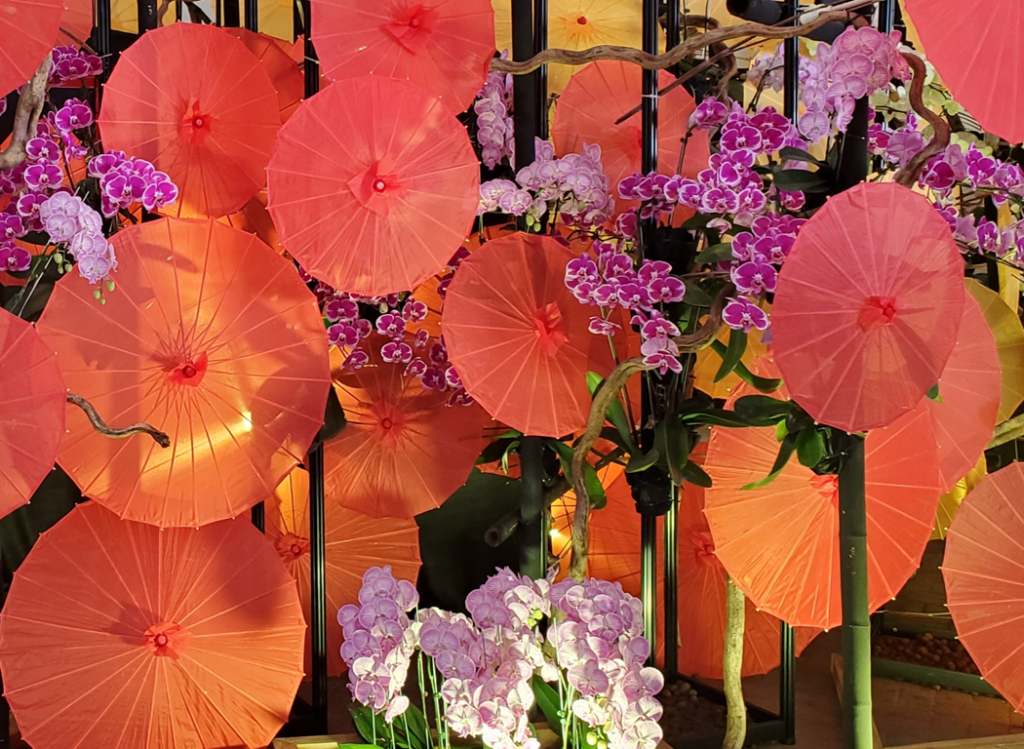
The Floral Technology Exhibition’s centerpiece was an immersive hall where curved LED walls spanning the full perimeter, suspended overhead panels, and 3D projection mapping dissolved the boundary between the botanical and the digital. Visitors did not simply look at orchids — they found themselves inside them, surrounded by floor-to-ceiling projections of Phalaenopsis patterns, tropical botanicals, and kaleidoscopic floral geometries that made the invisible architecture of a living flower fully and physically present.
The exhibition’s most celebrated interactive installation featured a 3D-projected digital creature — a luminous whale constructed entirely of orchid blooms — that descended through the darkened hall, releasing cascades of flowers toward visitors below. Using AR-enabled mobile devices, visitors could catch virtual blossoms as they drifted down, each one revealing botanical information, cultivation data, or a conservation message when touched. The cognitive load of a fact sheet about orchid conservation is high; the experience of catching a glowing bloom released by a whale made of flowers lands somewhere else entirely — in the part of the brain that feels first and thinks second. That, as environmental educators increasingly understand, is where lasting commitment forms.
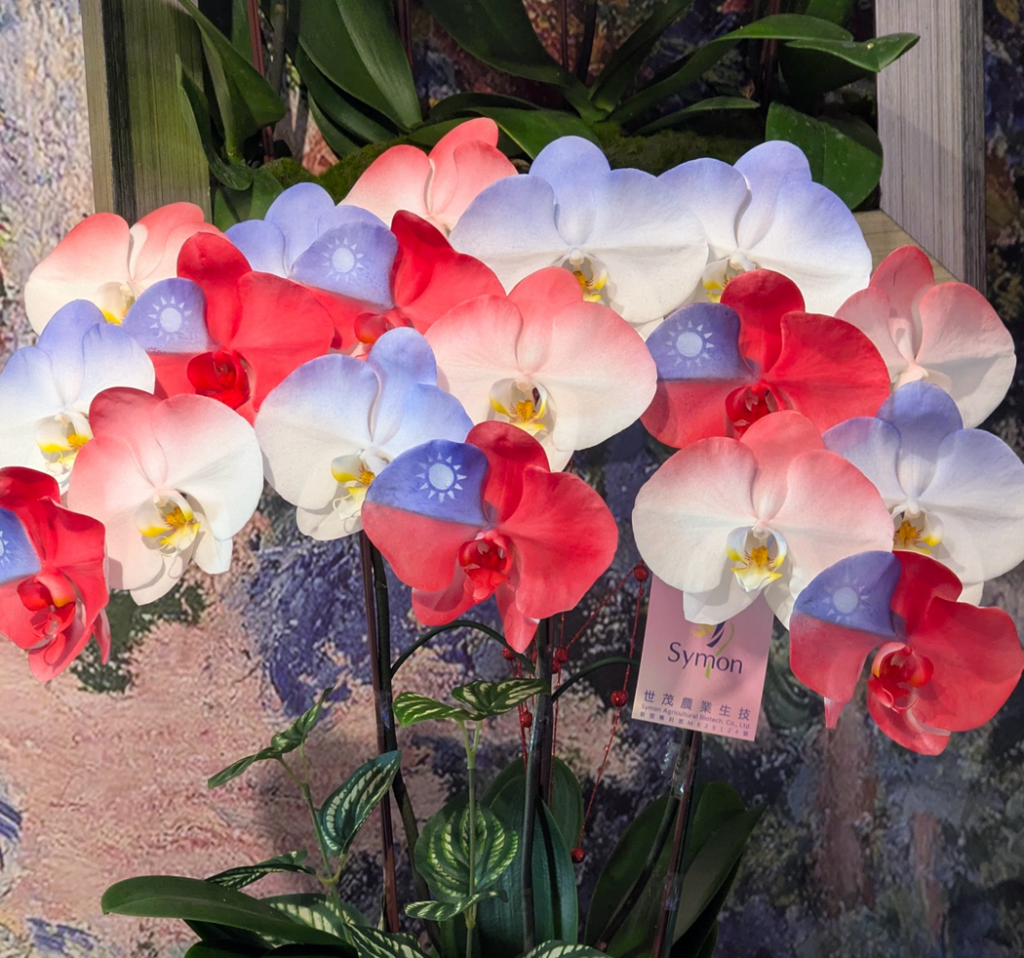
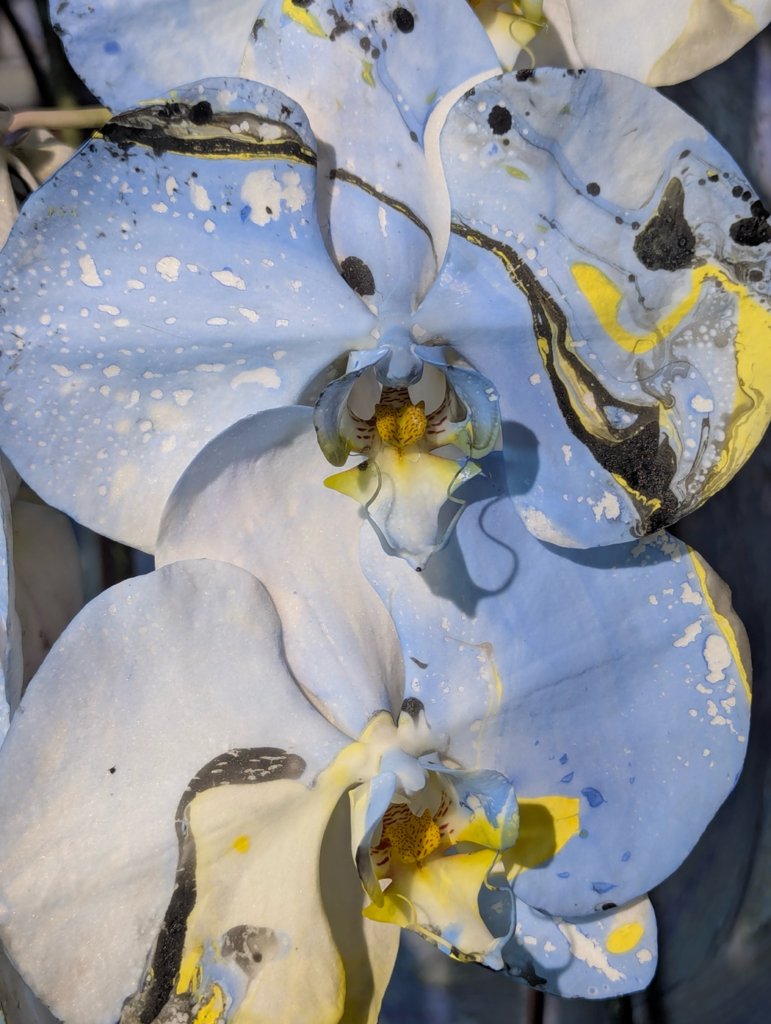
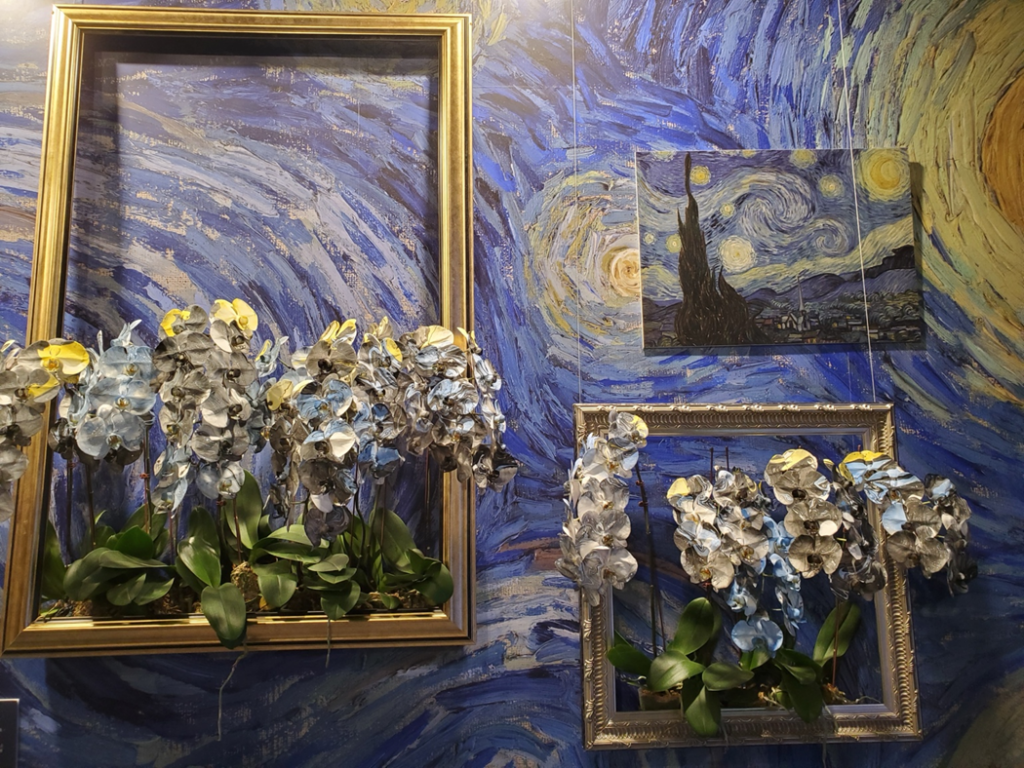
Water-dyed orchid installations — blooms transformed through hydration techniques that allow natural pigments to migrate through vascular systems, producing colors that do not exist in nature — completed the picture: technology in genuine service to wonder, deepening rather than replacing the encounter with a living plant.
Conservation — From Wonder to Stewardship
The orchid faces real and serious threats: habitat loss in tropical cloud forests, climate-driven disruption of pollinator relationships, and illegal collection driven partly by the same beauty that makes orchids so culturally significant. Taiwan’s response has been to embed conservation logic directly into commercial strategy rather than treating the two as separate concerns. Investment in genetic diversity, digital documentation, and AI-assisted breeding simultaneously advances the industry and preserves the biological heritage it depends on.
This is the lesson that Asian Media Access carries forward as it develops the 5D Immersion Lab, inspired in part by the vision of the 2026 Taiwan Orchid Show: that agricultural technology and environmental education are not separate domains. The precision science that grows an extraordinary orchid is continuous with the conservation science that protects the habitats where orchids evolved. And the feeling of wonder that a beautiful flower produces in a human being — when amplified by technology that makes the invisible visible and the distant close — is one of the most renewable resources available to the global conservation movement.
Every visitor who engages with the Floral Technology Exhibition’s immersive installations leaves with something beyond a memorable experience. They leave with a felt sense of the living systems these flowers represent — a quiet, embodied understanding that orchids are worth knowing, worth growing, and worth protecting. This understanding echoes the Asian traditions that have always emphasized harmony with nature, gratitude for the harvest, and reverence for the living world that sustains us.
Asian Media Access’s upcoming 5D Immersion Lab will continue to explore how technology can carry both environmental significance and profound human benefit — keeping the orchid alive in nature, alive in technology, and, most importantly of all, alive in the hearts of every visitor who steps inside.