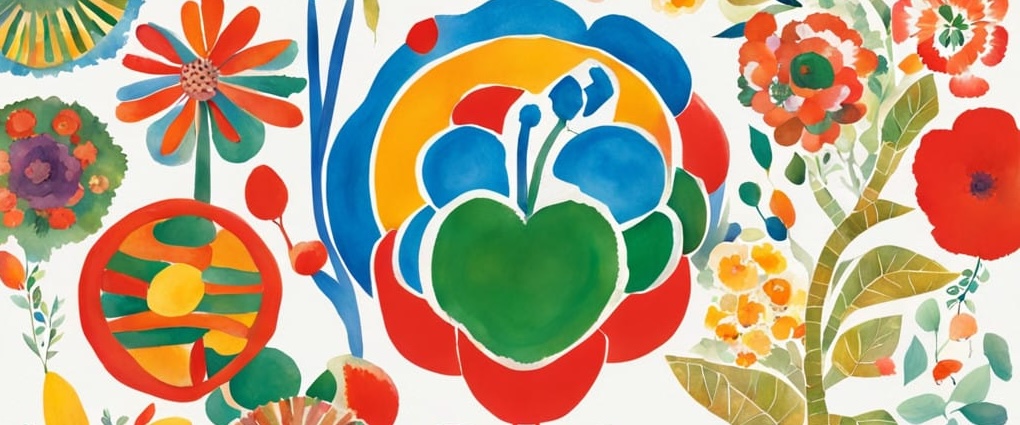
“Flowers and I are of the same root, the garden and I are one.”
— Zen Kōan · Philosophical foundation of teamLab’s Floating Flower Garden, Tokyo
No experience on our research tour was more instructive than the immersive installations of teamLab in Tokyo. Founded in 2001 by Toshiyuki Inoko, teamLab is a collective of artists, engineers, and mathematicians who dissolve the boundary between human and environment. Their exhibitions do not just display nature, but they technologically recreate living ecosystems so visitors are fully immersed within them.
teamLab’s official philosophy emphasizes immersion, embodiment, active participation, and the dissolution of boundaries between self and world. Rather than observing art, visitors enter it. Their movement shapes the environment in real time. The body becomes part of the artwork.
This shift from passive viewing to hands-on participation has direct implications for mental wellness. When individuals are sensorially engaged — walking, touching, pausing, interacting — attention moves out of rumination and into present-moment awareness. The boundary between interior thought and external environment softens. Presence replaces mental noise.
Immersion as Mental Wellness
teamLab designs shared digital ecosystems where each person’s movement affects the whole space. Visitors co-create the environment together. This encourages:
- Slowing internal mental chatter
- Sensory grounding in the present
- Awareness of connection with others and surroundings
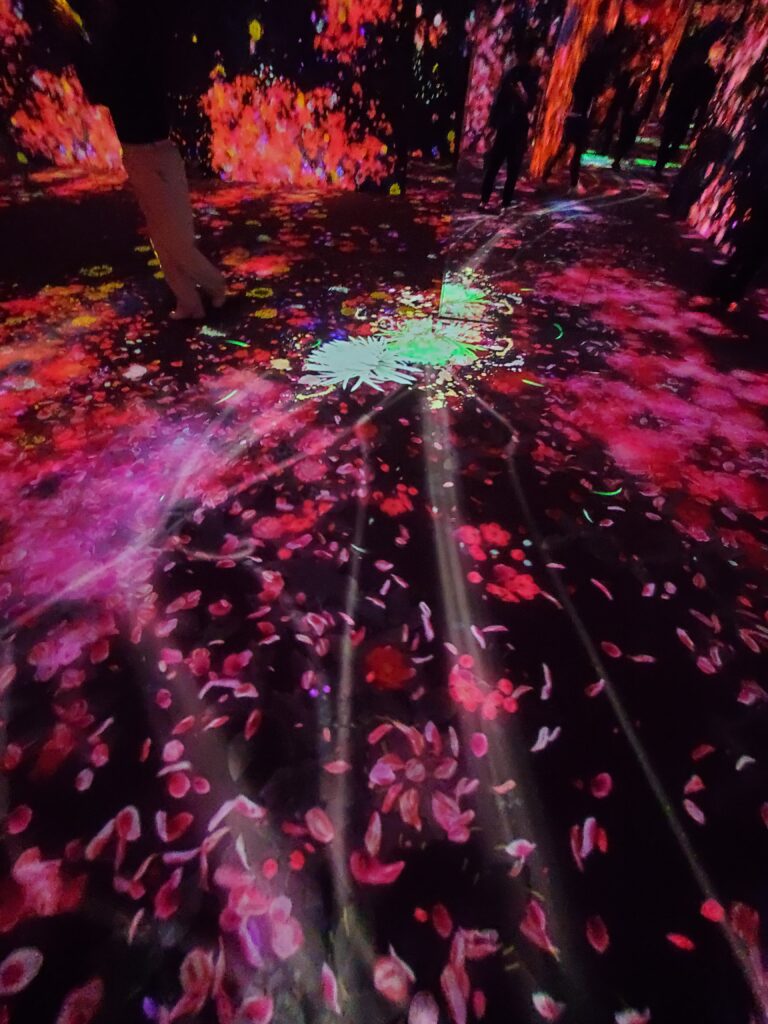
As teamLab describes, when the body immerses into the artwork, the boundary between self and world becomes ambiguous. This mirrors mindfulness practice, where healing arises from embodied awareness rather than intellectual effort. Their installations are not static; they evolve like natural systems – blooming, dissolving, shifting with time. This mirrors ecological rhythms and evokes what psychologists call “soft fascination,” a gentle attention state produced by natural environments that restores cognitive energy and reduces stress. Such therapeutic implications are profound. Visitors consistently report mental quieting, softened muscle tension, and heightened presence. This response is not accidental; it is carefully designed, especially with FLOWERS:
01 – Floating Flower Garden
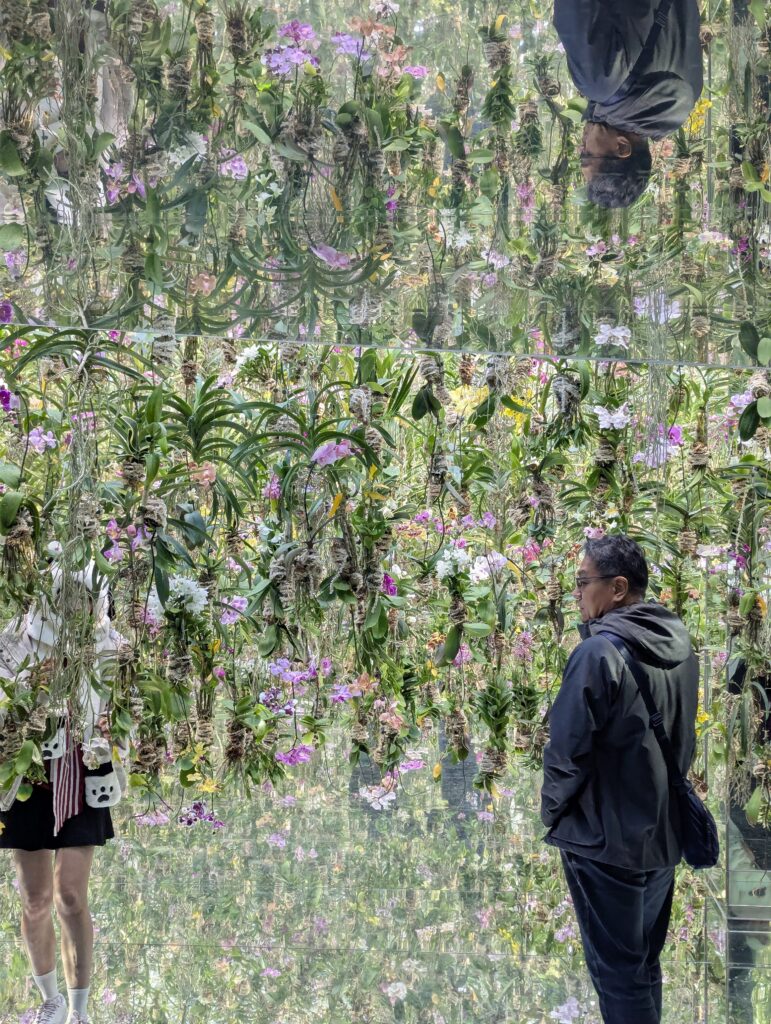
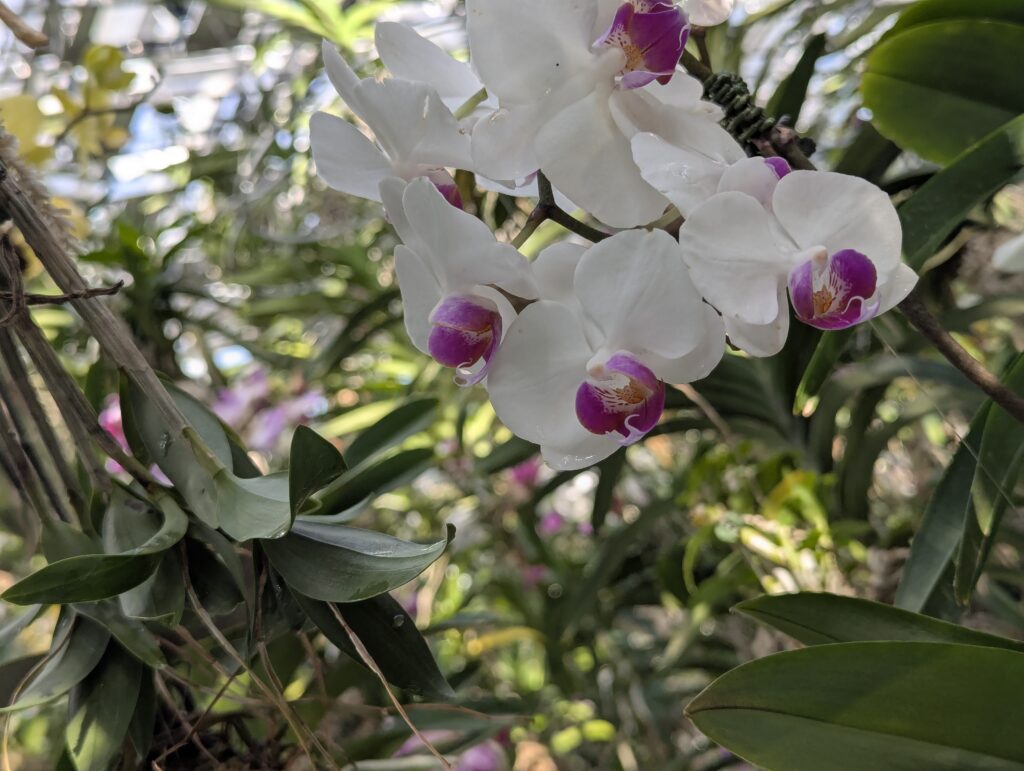
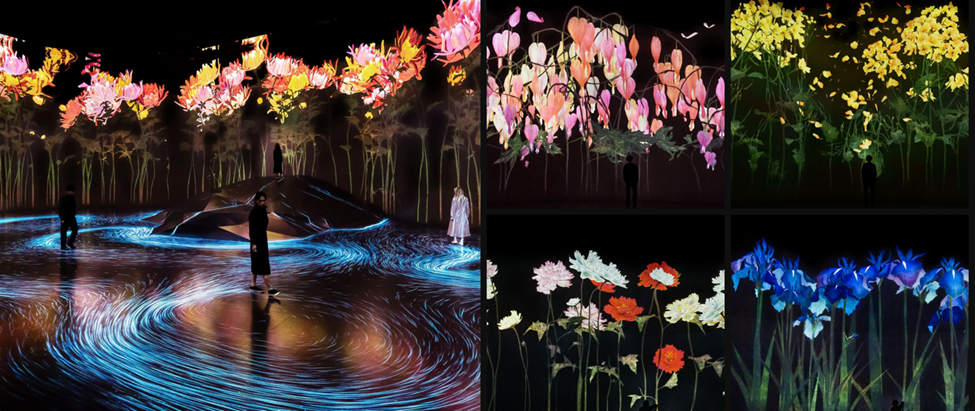
More than 13,000 real epiphytic orchids hang from the ceiling, rising and descending in response to human movement. Inspired by the Zen kōan “Nansen’s Flower,” the installation invites visitors to truly see a flower — perhaps for the first time. The tactile presence of real orchids, combined with being surrounded by living blooms at every height, creates a powerful biophilic response – when people approaching flowers rising. The boundary between body and garden dissolves. This living architecture models the type of immersive botanical healing the Center for Wellness Technology seeks to bring home.
02 – Flowers and People: Cannot Be Controlled, But Live Together
In this real-time digital environment, flowers bloom when visitors stand still and scatter when they move.
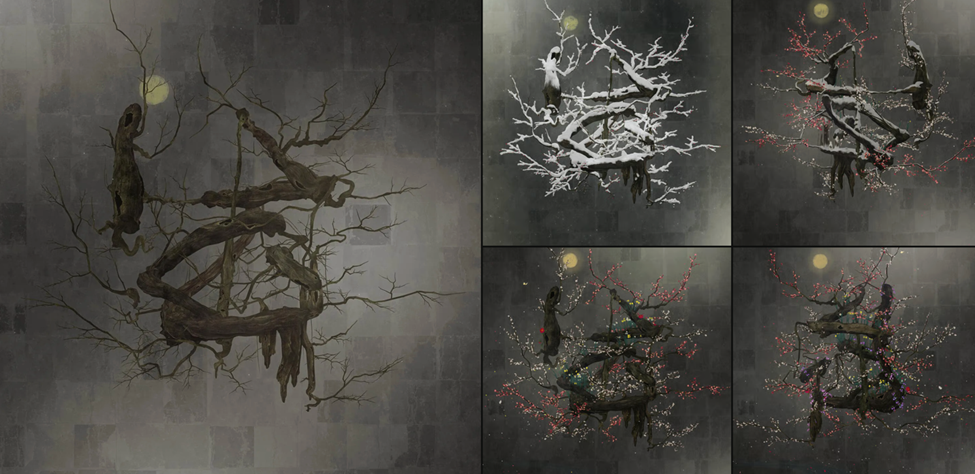
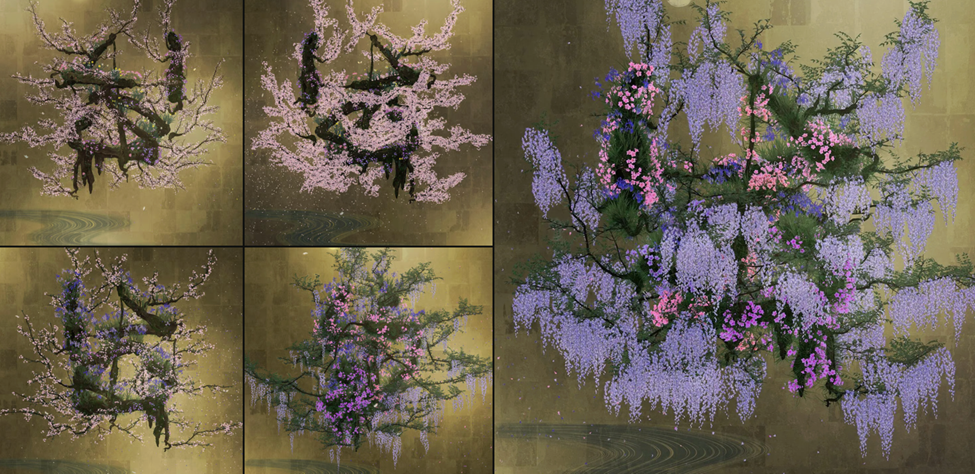
03 – Life Survives by the Power of Life II. The most amazing 3D calming work is placed at the restroom area. It depicts a full cycle of seasons – cherry blossoms, summer wildflowers, autumn chrysanthemums, winter stillness – unfolds within an hour. In this artwork, 生 (sei), the character that signifies life, is written three-dimensionally using Spatial Calligraphy. Spatial Calligraphy is a form of calligraphy drawn in space that teamLab has been exploring since it was founded. The artwork reconstructs calligraphy in three-dimensional branches to express the depth, speed and architectural mindfulness: stillness invites beauty. Calm presence generates bloom.
04 – Proliferating Immense Life — A Whole Year per Year
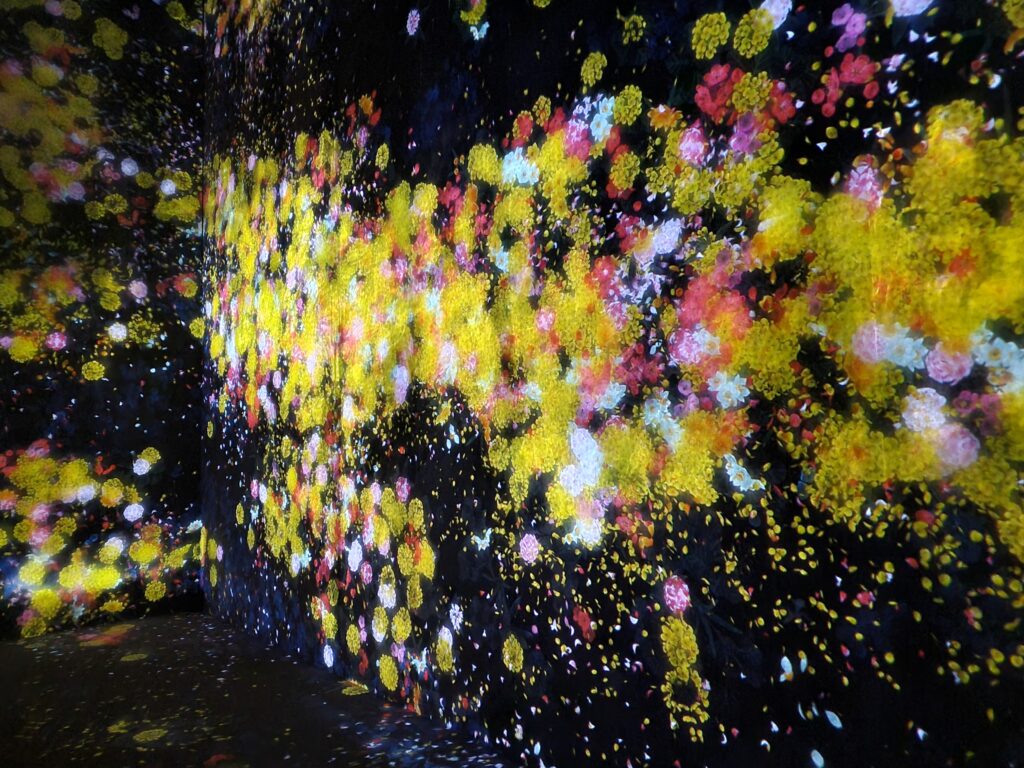
In this space, flowers follow real seasonal time. They are born, proliferate, fall, and disappear. When touched, they die. The artwork reflects impermanence and interdependence.Through teamLab’s concept of “Ultrasubjective Space,” walls no longer act as boundaries. The viewer’s body moves freely within a flattened, continuous world where flowers blur architecture itself. The environment becomes shared space — human and garden intertwined.
05 – Forest of Flowers and People: Immersed and Reborn
This total-environment digital forest blooms and transforms in response to each visitor. The experience gently overwhelms attention with beauty, interrupting anxiety and mental overactivity.
Psychologists call this state “soft fascination” — a restorative mental condition produced by natural environments. It replenishes cognitive energy depleted by screens, stress, and urban life. teamLab engineers this state intentionally.
Why Flowers Heal: The Botanical Case
teamLab’s choice of flowers is not symbolic alone; it aligns with strong scientific evidence. Flowers have measurable physiological effects on the nervous system. Studies show that viewing fresh flowers increases parasympathetic (calming) activity and reduces tension and anxiety. Research from Rutgers University and Texas A&M University links flowers to increased dopamine, serotonin, and oxytocin — neurochemicals associated with reward, mood stability, and connection. A study from University of North Florida found that living with fresh flowers significantly reduced perceived stress, with benefits lasting days after removal. In immersive environments where flowers surround visitors for extended periods, these effects are amplified by design.
The Garden as Mindfulness Architecture
Exposure to gardens and seasonal blooms restores cognitive capacity and lowers stress biomarkers. The Japanese practice of “shinrin-yoku” (forest bathing) has been shown to reduce cortisol, blood pressure, and anxiety while improving immune markers. An immersive floral environment recreates these benefits indoors — year-round and accessible to urban communities.
Biophilia: Our Innate Bond with the Living World
Biologist E. O. Wilson described biophilia as humanity’s deep evolutionary affinity for living systems. Flowers act as “nature bridges,” activating neural pathways associated with safety, warmth, and wellbeing. They engage sight, scent, attention, and emotion simultaneously. At teamLab, flowers are not decoration. They are active therapeutic agents – dissolving boundaries, rewarding stillness, and restoring presence through viewers’ mindfulness steps.
These insights will guide the design of our Center for Wellness Technology: to engineer immersive floral environments that reawaken our innate bond with nature, bringing measurable calm and non-invasive healing into community space.