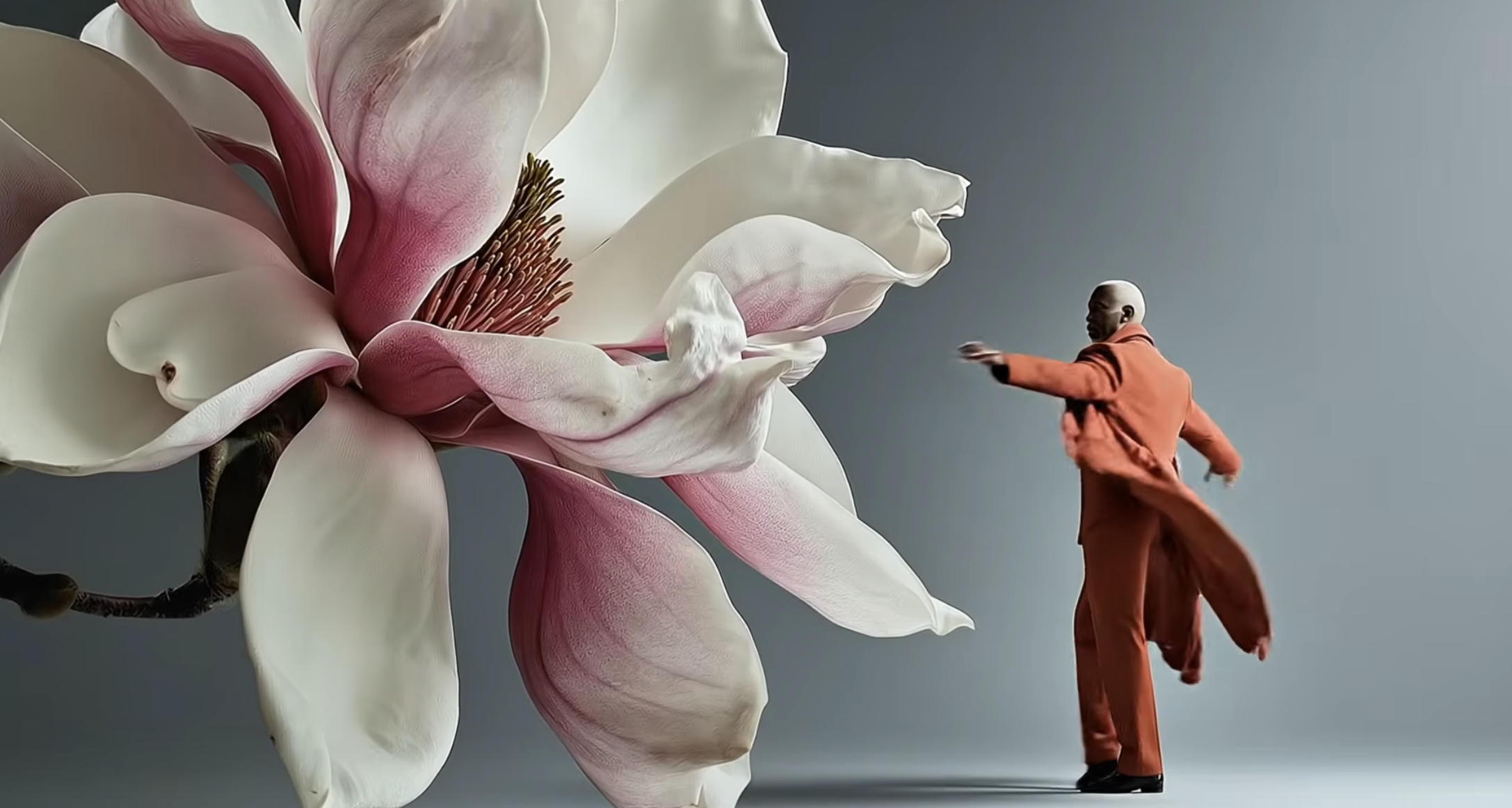
When the Screen Becomes a Sanctuary – How Surreal AI Short Films Are Becoming an Unexpected Wellness Trend on YouTube
There is a new kind of film entering people’s lives quietly. No box office, no festival premiere. It arrives on a phone screen at the end of a difficult day, lasts three or four minutes, and features dreamlike lands with imagery creatures, bodies wearing elaborated costumes, floating oversized objectives, panning through luminous landscapes, movement that defies physics but honors emotion. And when it ends, the people who watched it feel measurably better.
Surreal AI short film is emerging as an unexpected wellness medium — and it is happening organically, faster than either the tech industry or the mental health community has noticed. On YouTube, a growing number of channels are building quiet but devoted audiences around this format: slow, hypnotic, photorealistic-but-impossible visuals rendered by generative AI tools, set to original music, centered on dignity and beauty rather than conflict or spectacle. The comments under these videos read less like film reviews and more like letters to a therapist who arrived unexpectedly and helped.
“People have always turned to beauty as medicine. What’s changed is that beauty is now arriving without friction — directly to whoever needs it, exactly when they need it.”
The Case Study: “Elderly Fashion Dance • We Are The Late Light”
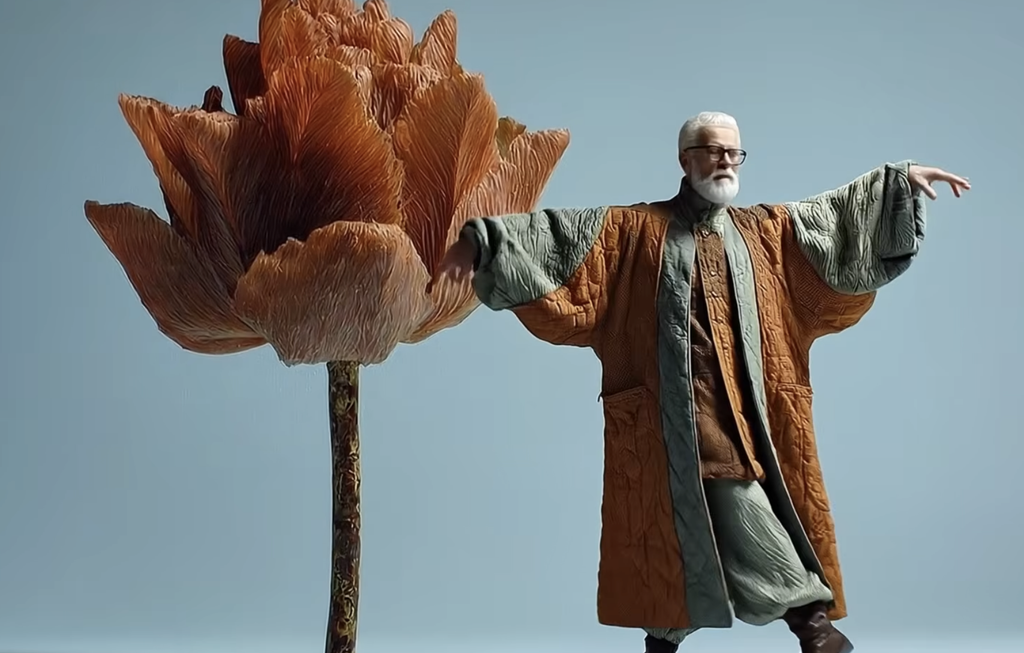
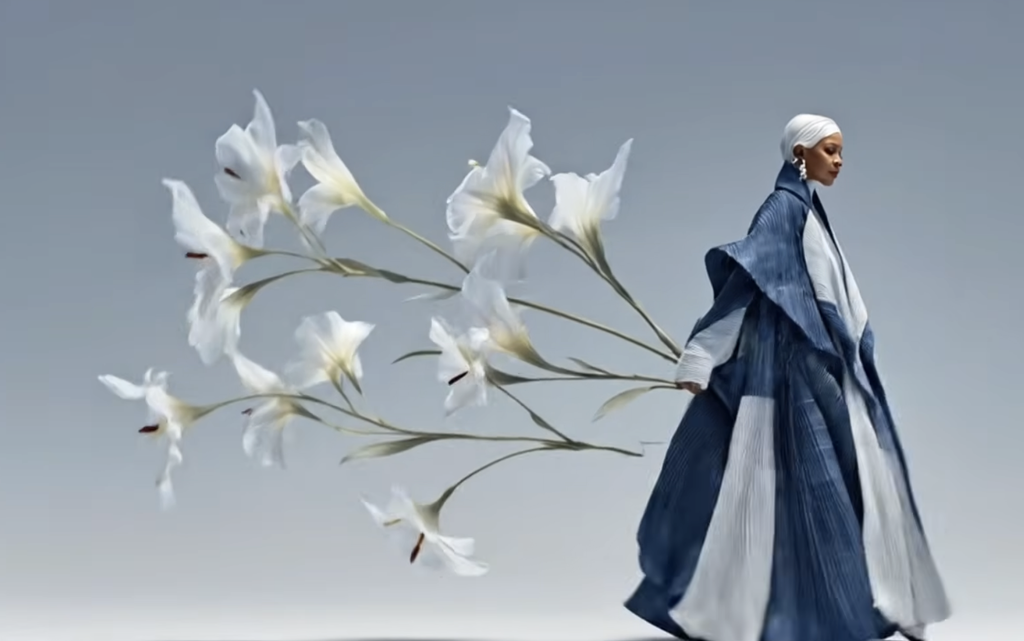
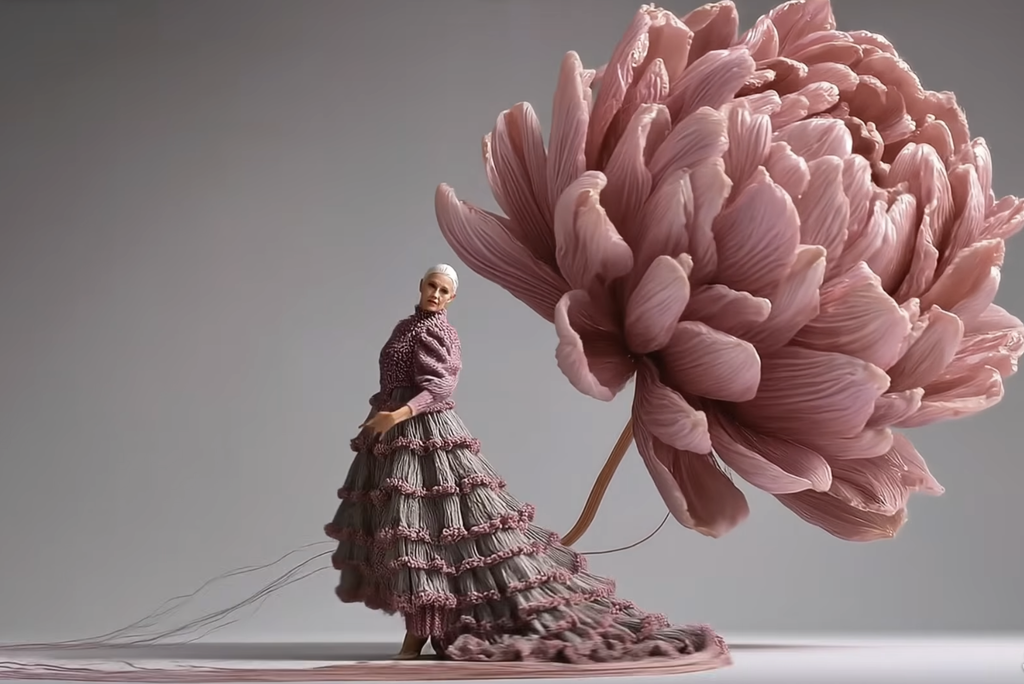
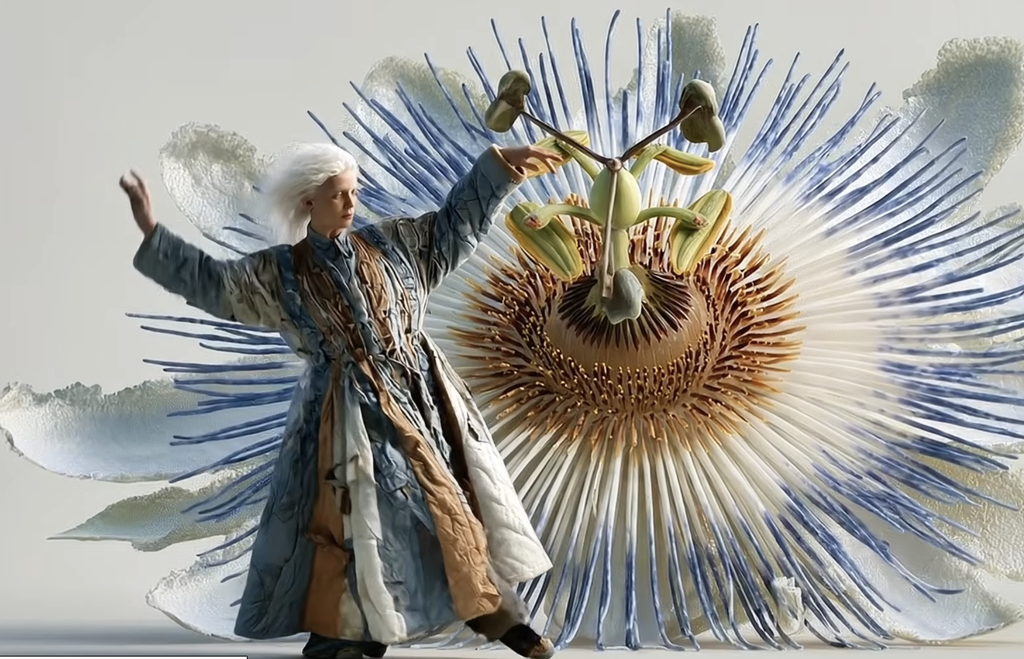
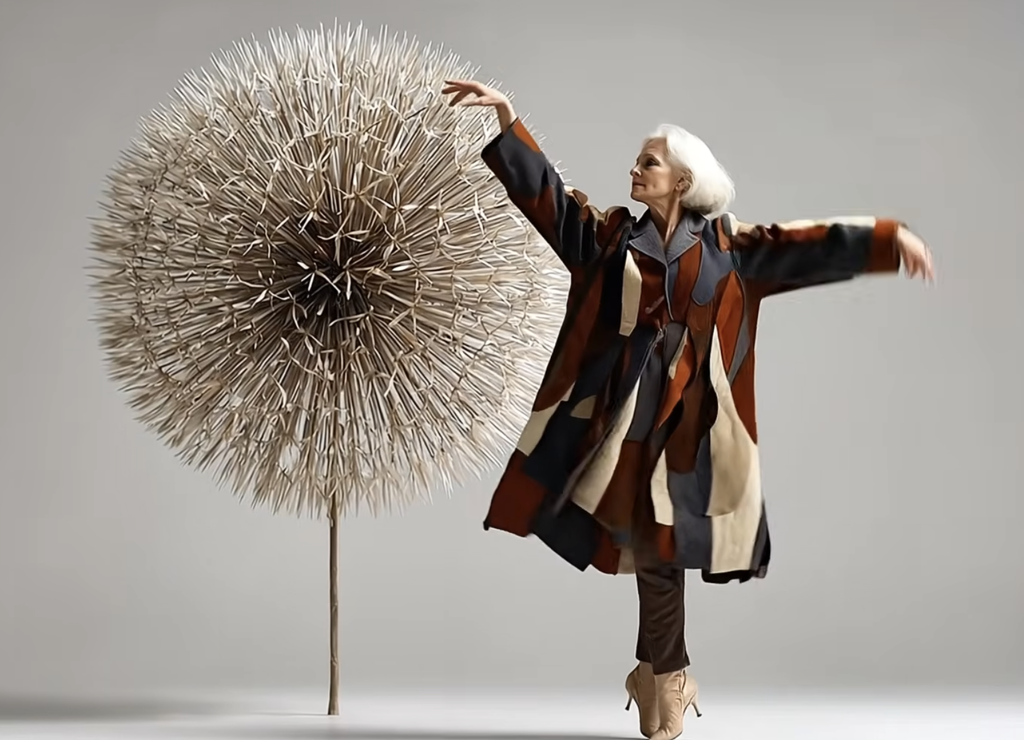
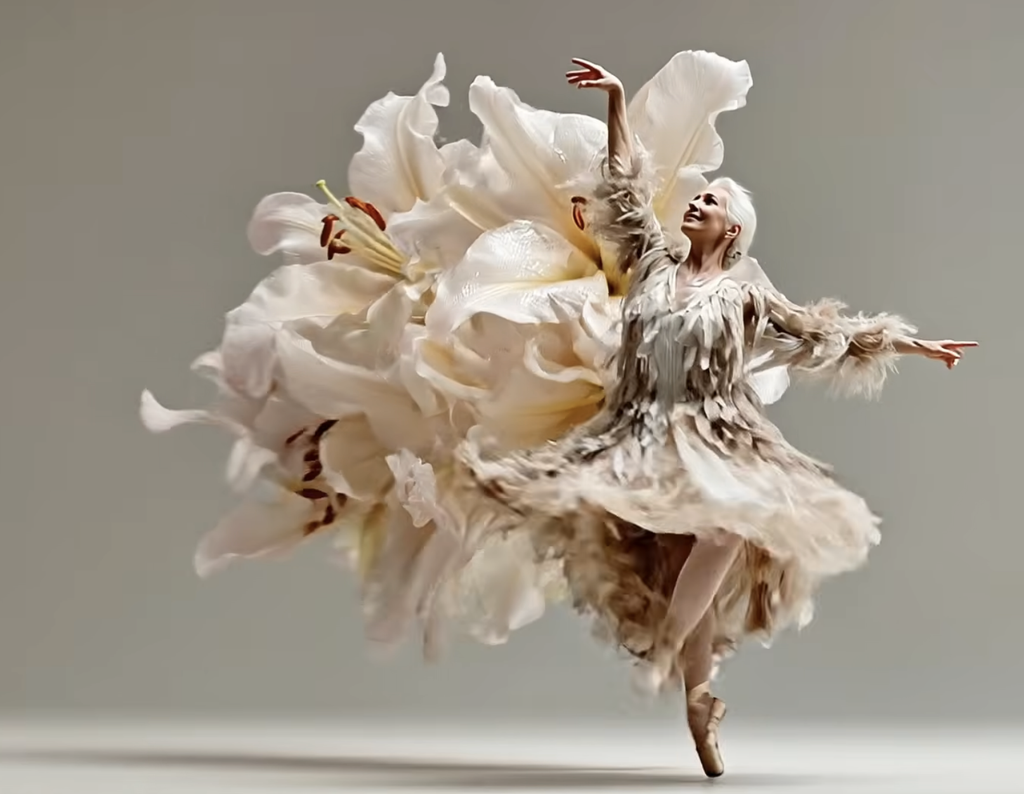
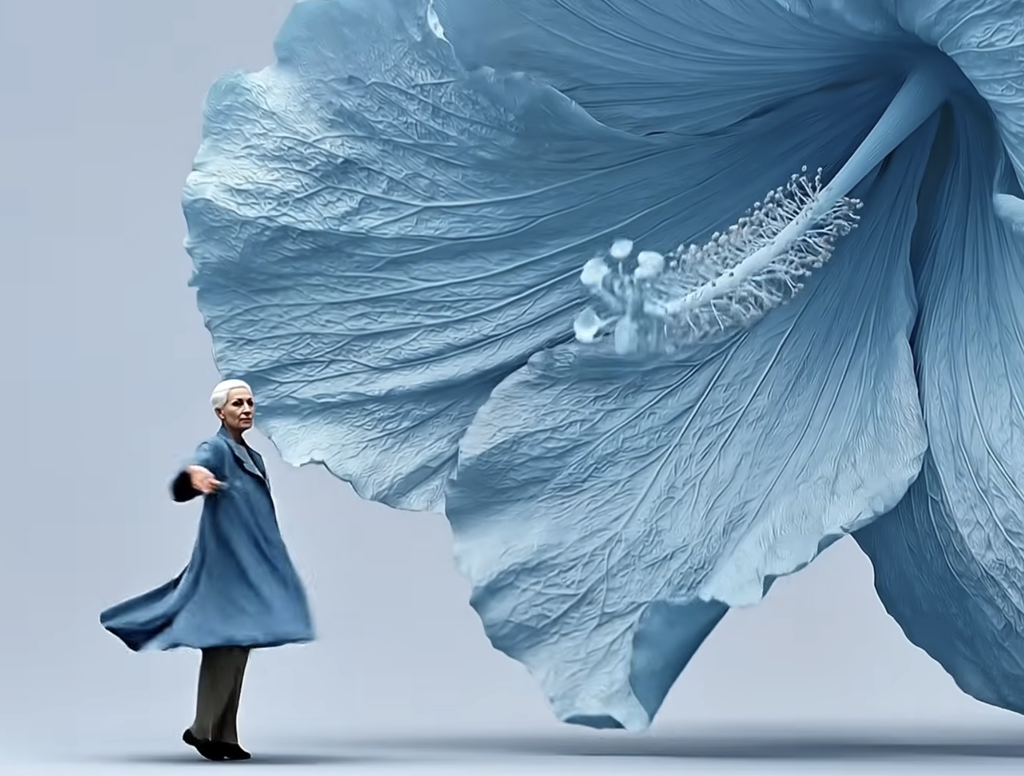
One film has become a small touchstone for this genre: “Elderly Fashion Dance • We Are The Late Light” by Surreal AI Music — a surreal AI short featuring older performers in elaborate, nature-inspired costuming moving through hyperreal floral landscapes to original music built from deeply personal lyrics. Made using Midjourney and Nano Banana Pro for imagery, Veo 3 for cinematic motion, and Suno for original music, the film’s comment section tells a story that has nothing to do with its technology and everything to do with what it does to the people who watch it.
Viewers from Russia, China, the United States, and elsewhere arrived independently at the same words: beautiful, peaceful, alive. A Russian-language viewer, a Chinese-language viewer, and an English speaker watching the same piece described identical experiences. The surreal visual language – bodies and nature in impossible proportion, movement freed from gravity – appears to communicate emotionally across cultures and languages in a way that realistic film often cannot.
Three Wellness Registers — What Viewers Actually Experience
When viewers describe what surreal AI films do for them, they don’t mention artificial intelligence. They describe what happened inside them. Three distinct wellness functions emerge consistently:
EMOTIONAL REFUGE — The impossible scale and soft luminosity create a perceptibly safe environment that asks nothing of the viewer. For someone carrying stress, grief, or exhaustion, this unconditional visual welcome is itself therapeutic.
“I’ve been having a rough week. This video arrived at the right moment, soothing me and helping me de-stress — a loving, kind environment, a hidden secret refuge. It reminded me to trust a little more.” — Viewer, following a difficult week
VICARIOUS EMBODIMENT — Watching bodies in motion produces physical resonance. Neuroscience calls this mirror neuron activation: the brain’s motor systems engage when observing purposeful movement, producing something that shares real properties with physical experience. Dance therapy has worked this way for decades. AI film delivers it without a studio, a therapist, or a body that must move in any particular way.
“I watched it twice. The first time I absorbed the visuals and music. The second time I put on a flowing skirt and moved along with the dancers — letting the oldness flow out into beauty.” — Viewer who danced with the film
“I’ve loved dance my whole life. Physical injury has taken away my ability to move as freely now, but I danced vicariously through this piece. Thank you for the joy.” — Viewer, near 80 years old
BEAUTY AS RESTORATION (THE AWE EFFECT) — Research by Dacher Keltner at UC Berkeley documents a specific neurological state triggered by encounters with beauty or scale that exceeds ordinary expectation. Awe reduces self-focused rumination, increases prosocial feeling, and produces a meaningful reduction in inflammatory markers. The surreal scale of AI film — oversized flowers, luminous impossible environments — reliably triggers it.
“They did not seek out a wellness program. They watched a short film. And yet what happened maps almost exactly onto the benefits of guided relaxation, music therapy, and art-based mental health intervention.”
Elders at the Center — A Quiet Cultural Statement
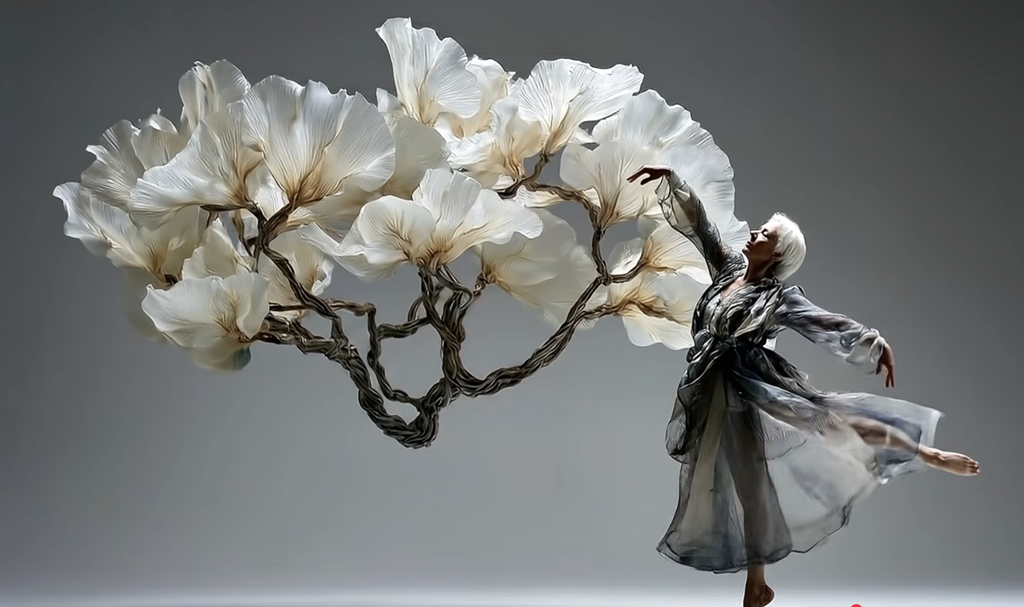
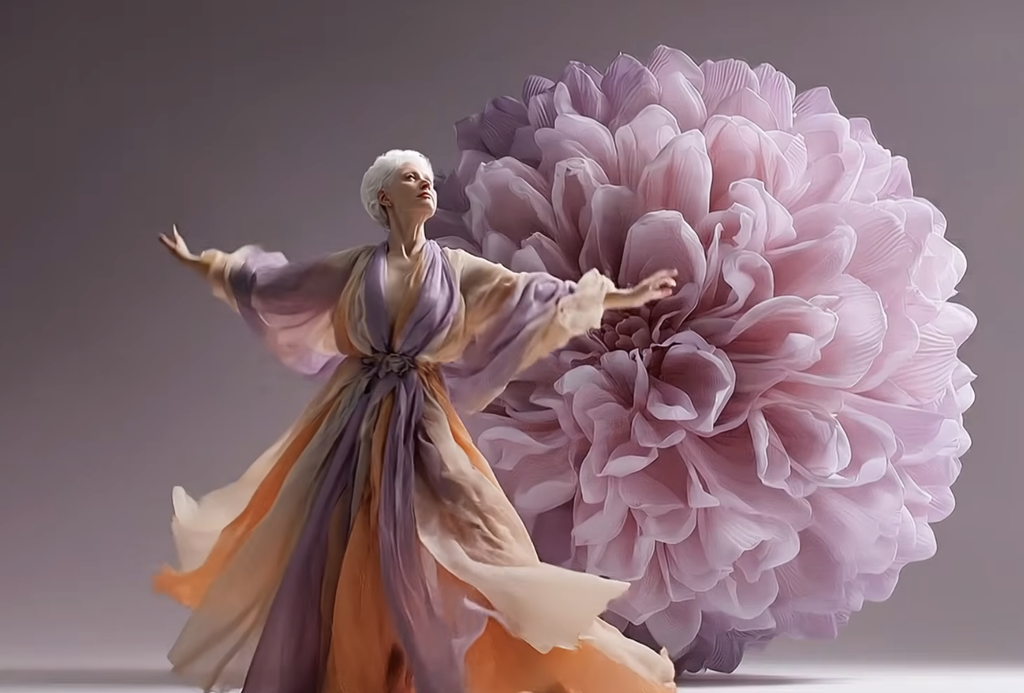
Among the most striking features of this emerging genre is its centering of older performers — not as objects of nostalgia, but as primary bearers of beauty, movement, and aliveness. In a visual culture that equates youth with vitality, the surreal AI film that lights an elder’s face from within and lets her move through impossible flowers at her own pace is making a therapeutic argument: beauty and joy do not have an expiration date. Viewers respond to this powerfully, and across generations – one elder near 80 who danced vicariously, the younger viewer at the end of a hard week who felt something about dignity and continuity she could not have named before the film gave it to her.
The YouTube Trend — A Genre Finding Its Audience
Surreal AI short film is growing rapidly as a YouTube genre, driven not by major studios but by individual creators with generative AI tools that did not exist three years ago — Midjourney, Veo 3, Suno, Runway — and a genuine emotional investment in their subject. The format is distinctive: 3–6 minutes, slow hypnotic pacing, original music designed to release the viewer’s attention rather than capture it, and visual environments that are photorealistic in detail but impossible in scale. Channels in this space are accumulating tens of thousands of loyal subscribers whose comment sections function less as feedback and more as community testimony — people finding each other around a shared experience of unexpected restoration.
This is the wellness media of the next decade: not an app, not a clinical program, but a four-minute film made by one person with a laptop, distributed for free, received by someone thousands of miles away who needed exactly that thing at exactly that moment and found it without trying. For older adults with limited mobility, for people managing chronic illness, for immigrants whose cultural memories mainstream media never reflects back to them – for anyone who cannot afford a museum ticket, a therapy session, or a flight to anywhere beautiful – the screen, for a few minutes, becomes a sanctuary.
“The comment sections under the most resonant AI wellness films read less like film reviews and more like letters to a therapist who arrived unexpectedly and helped.”